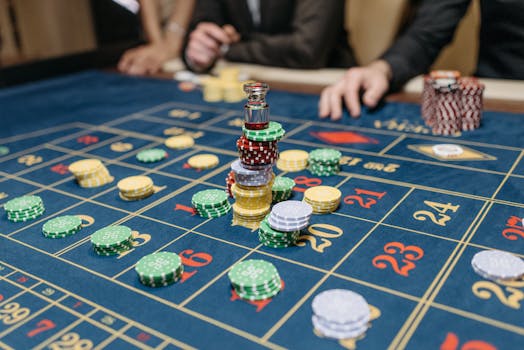
Gambling is an age-old pastime, offering excitement, entertainment, and the tantalizing chance of winning big. But behind every casino game, a mathematical principle quietly shapes your experience: the house edge. Understanding this concept is essential for anyone who wants to gamble smarter, make informed choices, and appreciate the fascinating balance between luck and probability. In this comprehensive guide, we'll break down what the house edge is, how it works across different games, and how it impacts your long-term chances. Whether you're a casual player or a budding strategist, knowing the house edge can transform the way you approach gambling.
What Is the House Edge and Why Does It Matter?
At its core, the house edge is the mathematical advantage that a casino holds over players in any given game. Expressed as a percentage, it represents the average amount of each bet that the casino expects to keep over the long run. For example, if a game has a house edge of 2%, the casino anticipates earning $2 for every $100 wagered.
This edge isn't about trickery—it's built into the rules and payouts of each game. The house edge ensures that, over millions of bets, the casino remains profitable. For players, it means that while luck can deliver short-term wins, the odds ultimately favor the house.
.png) Key facts:
- The average house edge across all casino games ranges from less than 1% to over 25%.
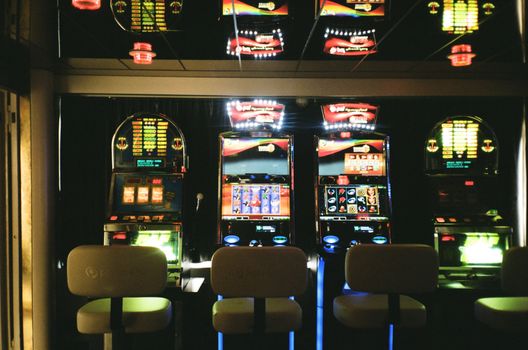
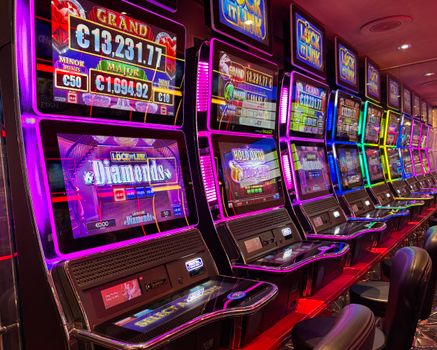
- Slot machines in Las Vegas typically have a house edge between 4% and 10%.
- Games like blackjack, when played with perfect strategy, can lower the house edge to under 1%.
Key facts:
- The average house edge across all casino games ranges from less than 1% to over 25%.
- Slot machines in Las Vegas typically have a house edge between 4% and 10%.
- Games like blackjack, when played with perfect strategy, can lower the house edge to under 1%.
Grasping the house edge helps you set realistic expectations and make smarter decisions about which games to play.
How the House Edge Is Calculated
The calculation of the house edge is a blend of probability, payout rules, and game structure. Casinos employ mathematicians and statisticians—often called "gaming analysts"—to design games with a built-in profit margin.
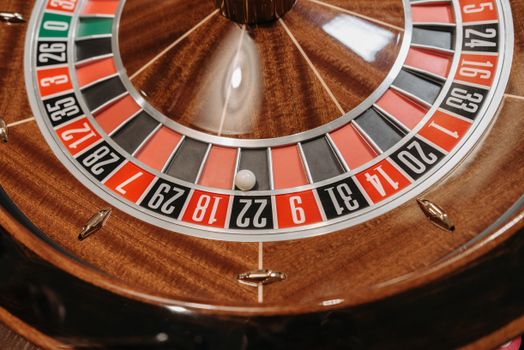
To calculate the house edge, analysts consider: - The probability of every possible outcome - The payout for each outcome - The average expected return to the playerFor example, in European roulette, there are 37 numbers (1-36 plus a single zero). A straight-up bet on one number pays 35 to 1. The probability of winning is 1/37 (about 2.70%), but the payout is only 35 times your bet. Over time, this difference creates a house edge of approximately 2.70%.
Here's a simple formula:
House Edge (%) = [(Average Loss per Bet) / (Amount Bet)] × 100
If you bet $1 on a game 1,000 times, lose $50 overall, and wagered $1,000 in total, the house edge would be:
(50 / 1000) × 100 = 5%
This principle applies to all casino games, though the exact numbers vary.
House Edge by Popular Casino Games: A Comparative Overview
Not all games are created equal when it comes to the house edge. Some offer players a better shot, while others favor the casino much more heavily. Here's a comparative table highlighting the house edge for several popular games:
| Game | House Edge (%) | Best-Case Scenario | Worst-Case Scenario |
|---|---|---|---|
| Blackjack | 0.5 – 2.0 | 0.5% (perfect strategy) | 2.0% (average player) |
| Baccarat (Banker Bet) | 1.06 | 1.06% (standard rules) | 1.24% (Player Bet) |
| European Roulette | 2.70 | 2.70% (single zero) | 5.26% (American Roulette) |
| Craps (Pass Line) | 1.41 | 1.41% (Pass Line) | 16.67% (Any 7 bet) |
| Slots | 4.0 – 10.0 | 4.0% (high-payout machines) | 10.0% (low-payout machines) |
| Keno | 25.0 – 29.0 | 25.0% (best paytables) | 29.0% (worst paytables) |
As you can see, the house edge varies widely. Skilled games like blackjack reward knowledgeable players, while games of pure chance like keno or slots offer higher house advantages.
The Psychological Impact of the House Edge
The house edge isn't just a number—it shapes the entire casino experience. Casinos use the house edge to create excitement while ensuring their own profitability. But most players underestimate its impact, especially over time.
For example, a game with a 5% house edge might seem harmless. But after 100 bets of $10 each ($1,000 wagered), the expected loss is $50. While you might get lucky in a short session, the longer you play, the closer your results will mirror the house edge.
Casinos also design games and environments to obscure the house edge: - Fast-paced games lead to more bets per hour, increasing the casino’s expected profit. - Bright lights and sounds distract players from tracking losses. - “Near-miss” outcomes on slot machines encourage further play, even though the odds remain unchanged.A 2021 study by the University of Nevada found that 78% of casino gamblers could not accurately estimate the house edge of their favorite games. This highlights the importance of education for responsible gambling.
Short-Term Luck vs. Long-Term Reality
One of the most common misconceptions is that streaks of luck can overcome the house edge. While it's true that anyone can win big in a single night, the law of large numbers ensures that the house edge prevails over time.
Consider this example: - You play $10 blackjack hands for two hours, averaging 60 hands per hour (120 hands total). - With a house edge of 1%, your expected loss is $12 ($10 × 120 × 1%).While you might finish up or down by a much larger amount, if you repeated this session thousands of times, your average loss would settle close to that $12. This is why professional gamblers focus on games with the lowest house edge and use strategies to minimize it further.
For most players, understanding this dynamic can help curb unrealistic expectations and encourage setting win/loss limits.
Reducing the House Edge: Myths and Realities
While you can't eliminate the house edge, you can take steps to reduce its impact:
1. $1 Stick to games with the lowest house edges, like blackjack, baccarat, and craps. 2. $1 Master optimal strategies—especially in skill-based games. 3. $1 Steer clear of wagers with steep house edges, such as keno, side bets in blackjack, or “Any 7” in craps. 4. $1 Fewer bets per hour mean less money exposed to the house edge. 5. $1 No system (like Martingale or Fibonacci) can overcome the math of the house edge in the long run.It’s also a myth that casinos “tighten” or “loosen” machines based on time of day or how much you’ve won. Payouts on slots and video poker are governed by random number generators (RNGs), and the house edge is constant.
Final Thoughts on Understanding the House Edge
The house edge is the invisible force that powers every casino, shaping both player experiences and casino profits. For gamblers, understanding this concept is the first step toward more responsible, enjoyable, and strategic play. By recognizing which games offer the best odds, learning optimal strategies, and setting clear limits, you can tilt the experience a little more in your favor—while appreciating the thrill and unpredictability that makes gambling so enduring.
Remember, gambling should be seen as entertainment, not investment. The house always has an edge, but being informed lets you play smarter, stretch your bankroll, and have more fun along the way.