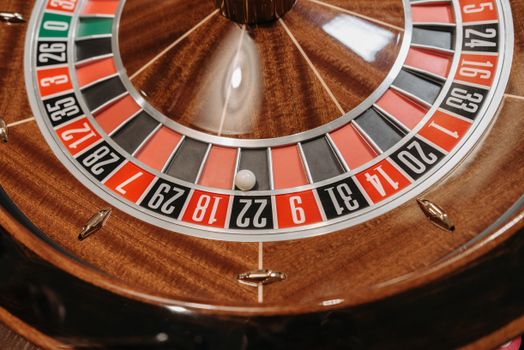
Roulette is one of the most iconic casino games in the world, captivating players with its blend of chance, strategy, and excitement. With its spinning wheel and the thrill of the little white ball bouncing toward a final number, roulette offers a unique gaming experience. But while the outcome may seem entirely random, understanding the best strategies for playing roulette can help you maximize your chances and enjoy a smarter, more rewarding game. In this article, we’ll dive deep into proven approaches, the mathematics behind the bets, and actionable tips you won’t find in generic guides.
Understanding Roulette Odds: The Foundation of Smart Play
To increase your chances of winning at roulette, you need to start with a clear understanding of the odds. Roulette comes in several variations, the most common being European (single zero) and American (double zero) wheels. This small difference significantly impacts your chances.
In European roulette, there are 37 pockets: numbers 1-36 and a single 0. In American roulette, there are 38 pockets: 1-36, a single 0, and a double 00. The house edge in European roulette is about 2.7%, while in American roulette, it jumps to 5.26%. This matters: a lower house edge means better long-term returns for players.
.png)
Here’s how the odds compare for key bet types:
| Bet Type | European Roulette Odds | American Roulette Odds | Payout |
|---|---|---|---|
| Single Number (Straight Up) | 2.70% | 2.63% | 35:1 |
| Red/Black | 48.65% | 47.37% | 1:1 |
| Even/Odd | 48.65% | 47.37% | 1:1 |
| Column/Dozen | 32.43% | 31.58% | 2:1 |
A smart player always seeks out the version with the lowest house edge and understands how each bet choice affects their probability of winning.
Bankroll Management: The Cornerstone of Long-Term Roulette Success
No roulette strategy is complete without sound bankroll management. Even with the best odds, variance (the swings of winning and losing) can wipe out your funds if you don’t manage them carefully.
Here are key bankroll management tips for roulette:
- Set a session budget before you play. Experts recommend only risking 1-2% of your total gambling bankroll per session. - Divide your bankroll into smaller betting units. For example, if you have $200, consider $5 or $10 bets so you can weather losing streaks. - Never chase losses. When your preset loss limit is reached, walk away. Emotional decisions lead to poor betting choices. - Consider the volatility of your bet types. Even-money bets like red/black have lower variance, while straight-up number bets are high risk and can deplete your bankroll quickly. - Use winnings wisely. Some players pocket a portion of any winnings to preserve profit while continuing to play.A disciplined approach to money management not only extends your playtime but gives you a better shot at leaving the table with a profit.
Strategic Betting Systems: Do They Really Work?
Many roulette players are drawn to betting systems that promise to overcome the house edge. While no system guarantees consistent winnings, some strategies can help manage your risk and add structure to your play.
Let’s look at three of the most well-known roulette betting systems:
1. $1: Double your bet after every loss, aiming to recover all previous losses with a single win. While simple, this system is risky—it requires a large bankroll and can hit table limits quickly during losing streaks. 2. $1: Bet amounts follow the famous Fibonacci sequence (1, 1, 2, 3, 5, 8, etc.). After a loss, move to the next number in the sequence; after a win, move back two numbers. This reduces the risk compared to Martingale but still doesn't beat the house edge. 3. $1: Increase your bet by one unit after a loss and decrease by one after a win. This system is less aggressive and can help smooth out swings, but it won’t change the fundamental odds.All these systems revolve around even-money bets, like red/black or odd/even. While they can help add discipline and excitement, it’s essential to remember that every roulette spin is independent—no system can overcome the built-in house edge over the long term. Use betting systems for structure, not for guaranteed profits.
Advanced Strategies: Combination Bets and Sector Betting
Beyond standard betting systems, experienced roulette players often use advanced strategies to diversify risk and capitalize on table trends.
- $1: Instead of placing a single large bet, spread your chips across multiple bets. For example, you might bet on two dozens and a column, covering a large portion of the table. This increases your chances of hitting a payout, though the potential winnings per spin are smaller. - $1: In European casinos, players often use the racetrack layout to bet on specific wheel sections, such as Voisins du Zero (neighbors of zero), Tiers du Cylindre (thirds of the wheel), and Orphelins (orphans). This focuses your bets on clusters of numbers that are physically close together on the wheel, rather than just on the layout felt. While the odds don’t change, some players find this approach more engaging and believe it can help spot streaks. - $1: Some players track which numbers have hit most frequently (hot) or least frequently (cold) during a session. While every spin is independent, and past outcomes don’t impact future results, this can be a fun way to vary your betting approach.Remember, while these advanced strategies can make the game more interesting and help you manage your risk, they do not alter the fundamental odds of roulette.
The Importance of Game Selection: European vs. American Roulette
Choosing the right roulette variant is one of the simplest ways to maximize your chances of winning. As discussed earlier, the house edge differs significantly between European and American roulette. Let’s break down why this matters:
- $1: With only one zero, the house edge is 2.7%. This translates to a theoretical loss of $2.70 per $100 wagered over the long term. - $1: The addition of a double zero increases the house edge to 5.26%, meaning $5.26 per $100 wagered is lost to the house over time.Whenever possible, seek out European or French roulette tables. French roulette, often found in European casinos, offers the “La Partage” or “En Prison” rules, which return half your even-money bet if the ball lands on zero, further reducing the house edge to 1.35% for those bets.
Here’s a quick comparison:
| Roulette Variant | Zero Pockets | House Edge | Best for Players? |
|---|---|---|---|
| European Roulette | 1 | 2.7% | Yes |
| American Roulette | 2 | 5.26% | No |
| French Roulette (La Partage) | 1 | 1.35% (on even bets) | Best |
The bottom line: Always play the version with the lowest house edge to improve your long-term winning potential.
Psychology and Discipline: Staying One Step Ahead
Roulette is as much a mental game as it is a numbers game. The excitement of the spinning wheel can lead even experienced players to make impulsive decisions. Here are some psychological tips to maintain discipline and keep your play smart:
- $1 before starting and stick to them, no matter what. - $1 to avoid fatigue and emotional decisions. - $1—the mistaken belief that past spins affect future outcomes. Each spin is independent. - $1 and don’t get greedy. It’s better to walk away with a modest profit than to risk it all chasing a big win. - $1. Losing and winning streaks are part of the game; maintain your strategy.Research from the University of Nevada, Las Vegas, found that players who set strict limits and took regular breaks were 35% more likely to leave a session ahead compared to those who played continuously without discipline.
Smart Play: Maximizing Enjoyment and Your Chances in Roulette
While there’s no way to guarantee consistent wins at roulette, you can significantly improve your experience and potential outcomes by understanding the odds, managing your bankroll, choosing the right game, and maintaining discipline. Roulette should be approached as a game of chance with an element of skill in how you manage your play. By following the strategies above, you’ll be well-positioned to enjoy the excitement of the game while giving yourself the best possible chance to walk away a winner.