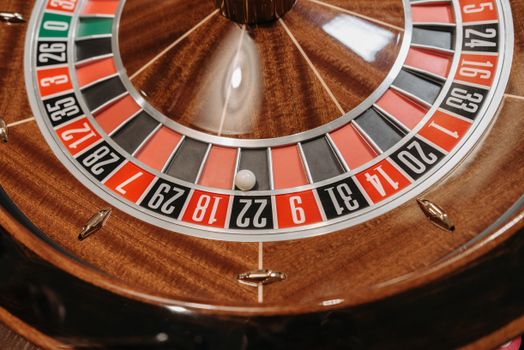
Roulette is one of the most iconic and thrilling games found in casinos worldwide. With its spinning wheel, bouncing ball, and wide range of betting options, it’s no wonder that millions are captivated by the game’s blend of chance and strategy. But is there a way to truly increase your chances of winning at roulette? While the game is fundamentally based on luck, understanding the best strategies for playing roulette can help you make smarter bets, manage your bankroll effectively, and maximize your enjoyment — and potentially your winnings.
In this comprehensive guide, we’ll explore the most effective strategies for playing roulette, backed by data and real-world examples. Whether you’re a casual player or an aspiring roulette enthusiast, these insights will help you approach the game with confidence and a clear plan.
Understanding the Roulette Wheel: European vs. American Variants
.png)
Before diving into specific strategies, it’s crucial to recognize that not all roulette games are created equal. The type of wheel you play on can significantly impact your odds.
European roulette features a single zero (0) and 36 numbers, resulting in a total of 37 pockets. American roulette, on the other hand, adds an extra double zero (00) for a total of 38 pockets. This seemingly small difference almost doubles the house edge.
Let’s compare key statistics:
| Roulette Variant | Number of Pockets | House Edge |
|---|---|---|
| European Roulette | 37 | 2.70% |
| American Roulette | 38 | 5.26% |
As you can see, playing European roulette gives you a distinct advantage. For every $100 wagered, you’ll lose an average of $2.70 in European roulette versus $5.26 in American roulette over the long run. If you’re serious about maximizing your chances, always choose European (or French) roulette when possible.
Bankroll Management: The Foundation of Smart Roulette Play
Regardless of the strategy you choose, effective bankroll management is essential to enjoying roulette responsibly and sustainably. In fact, studies show that players who set loss limits and session budgets are 40% less likely to experience problem gambling behaviors.
Some practical bankroll management tips include:
- Set a fixed budget before you start playing, and never exceed it. - Divide your bankroll into smaller session amounts (e.g., $200 total, $50 per session). - Use smaller bet sizes to stretch your playing time and weather inevitable losing streaks. - Avoid chasing losses by increasing your bet size out of frustration.For example, if you bring $100 to the table and play $5 bets, you can make 20 wagers before risking your entire bankroll. Compare that to playing $20 per spin — you’d only get 5 chances, and one bad streak could wipe you out quickly.
The key is longevity: the longer you play, the more opportunities you have to hit a winning streak or capitalize on favorable betting patterns.
Popular Roulette Strategies: How They Work and What to Expect
Roulette strategies are designed to manage bet sizes, cover more numbers, or exploit betting patterns. While no strategy can overcome the house edge in the long run, some approaches can help you play smarter and make your bankroll last longer.
Here are three of the most popular roulette strategies:
1. $1 - This is the most famous betting system, where you double your bet after every loss and reset to your original wager after a win. The idea is that a single win will recover all previous losses plus a small profit. - Example: Bet $5 on red. If you lose, bet $10 next. Lose again, bet $20, and so on. If you win at $20, you’re up $5 overall. - $1 Table limits and bankroll constraints can quickly make this system risky during long losing streaks. 2. $1 - Opposite of the Martingale, you double your bet after every win, aiming to let winning streaks run while minimizing losses during cold streaks. - Example: Bet $5, win, bet $10, win, bet $20, then collect profits after three consecutive wins. - $1 Limits losses during bad runs, but relies on rare consecutive wins for big profits. 3. $1 - A safer progression system where you increase your bet by one unit after a loss and decrease by one unit after a win. - Example: Bet $5, lose, next bet $6. Win, next bet $5. - $1 Players who prefer a slower, steadier approach.While these strategies don’t guarantee wins, they give players a framework for disciplined betting and can add structure to your roulette sessions.
Bet Selection: Inside vs. Outside Bets
Roulette offers a wide variety of betting options, each with different odds and payouts. Understanding the difference between inside and outside bets is key to developing your own betting strategy.
- $1 These are bets placed on specific numbers or small groups of numbers. Examples include straight-up (single number), split (two numbers), and corner (four numbers). Inside bets offer higher payouts (up to 35:1) but have lower chances of winning. - $1 These cover larger groups, such as red/black, odd/even, or 1-18/19-36 (low/high). Payouts are lower (1:1 or 2:1), but your chances of winning are much higher.Statistically, outside bets win nearly 48.6% of the time on European roulette (47.4% on American). Inside bets offer tantalizing payouts, but the odds are much longer.
A balanced strategy often involves focusing primarily on outside bets to ensure frequent small wins, while occasionally mixing in low-stake inside bets for the chance at a big payout.
Advanced Tips: Bias Spotting and Wheel Selection
While casino equipment is designed to prevent bias, physical roulette wheels can develop imperfections over time, causing certain numbers to hit more frequently. Professional advantage players have exploited this by tracking thousands of spins to detect biased wheels.
A famous case occurred in the 1980s, when a group of players in London’s Ritz Casino won approximately £1.3 million over several months by identifying and betting on “hot numbers” that appeared more often than statistically expected.
While online and modern casino wheels are regularly calibrated, land-based players can sometimes gain a slight edge by recording spin results and looking for patterns over hundreds or even thousands of spins. However, this approach requires patience, discipline, and a keen eye for detail.
For the everyday player, choosing a well-maintained European wheel and avoiding old, worn, or unbalanced wheels is a simple but effective way to protect your odds.
Psychology and Discipline: The Player’s Edge
One often-overlooked aspect of successful roulette play is the psychological component. It’s easy to be swept up in the excitement of the spinning wheel, especially after a streak of wins or losses. But emotional betting often leads to poor decisions and rapid bankroll depletion.
Here are some psychological tips to keep your play sharp:
- Take regular breaks to clear your mind. - Stick to your predetermined strategies and don’t let frustration dictate your bets. - Celebrate small wins and avoid the temptation to “let it ride” indefinitely. - Know when to walk away, especially after hitting your win or loss limit.Research from gambling behavior studies shows that players who maintain discipline and self-control are more likely to walk away winners — or at least minimize their losses — compared to impulsive bettors.
Final Thoughts on Increasing Your Roulette Winning Chances
While roulette is ultimately a game of chance, understanding the nuances of the wheel, employing smart bankroll management, and using proven betting strategies can help tilt the odds slightly more in your favor. By choosing the right version of the game, focusing on lower-risk bets, and maintaining psychological discipline, you’ll not only increase your chances of winning but also enhance your overall enjoyment at the table. Remember, the best roulette strategy is one that combines knowledge, fun, and responsible play.